
 +65 3138 7820

How Food Supply Chain Software Supports Quality & Compliance
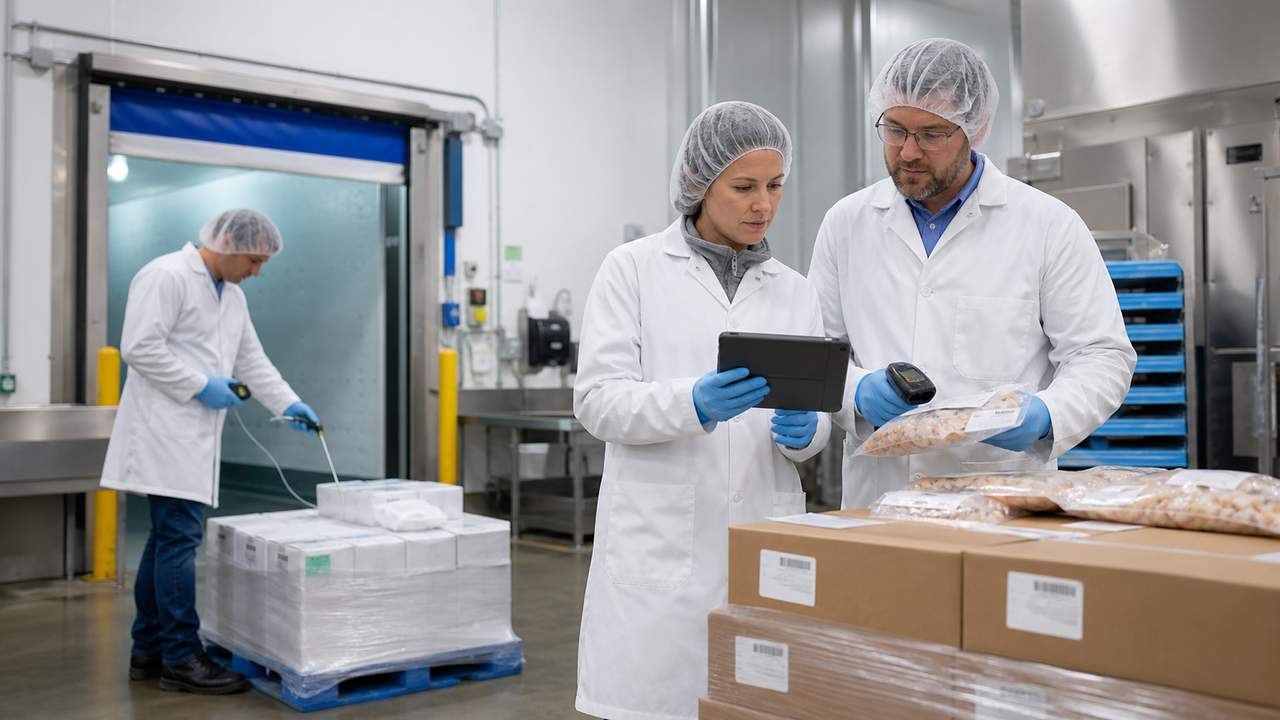
A delayed ingredient, a temperature excursion, or an incomplete lot record can quickly become more than an operations issue. Food businesses must move products on time while protecting quality, maintaining traceability, and producing records that fit the rules and customer requirements that apply to each market.
That’s where food supply chain software comes in. It supports that work by connecting supplier approvals, product specifications, purchase and receiving records, lots, production events, inspections, inventory status, temperature data, shipments, complaints, and corrective actions. It does not make a product safe or a company compliant on its own. People still set controls, assess risk, release or hold product, and verify legal obligations.
Why Food Supply Chains Need Control
Food supply chain software creates a shared operating record from sourcing through delivery. It can link what was ordered, which lot arrived, how it was stored or transformed, what checks were completed, where it moved, and who received it. That connection helps teams investigate exceptions and prepare evidence without relying on separate spreadsheets and inboxes.
Food has characteristics that make these records especially important. Shelf life declines with time, and handling can affect suitability. Ingredients may be combined, split, repacked, reworked, or substituted. Allergens, labeling, and customer specifications can change by item, recipe, site, or market.
For that reason, a useful system begins with governed master data. Item identifiers, recipes, allergens, shelf-life rules, storage conditions, approved suppliers, test plans, and status codes need clear owners. Software applies those definitions, but it cannot decide whether an outdated specification is acceptable.
How Software Supports Food Quality
The value of connected records becomes clearer at the points where food changes hands or condition. Each event should preserve the identity, quantity, status, location, time, and responsible party needed for the next decision.
Supplier and ingredient controls
Supplier records can hold approval status, sites, ingredients, specifications, certificates, audit results, risk tiers, corrective actions, and review dates. Purchase controls may restrict orders to approved supplier-item combinations or route exceptions for review. At receiving, staff can compare the delivered item, lot, quantity, documentation, packaging, and condition with the order and specification.
Approval is not permanent. A changed ingredient source, lapsed certificate, recurring defect, or serious complaint may require reassessment. Effective dates and approval history help users determine which rule applied to a receipt.
Cold-chain and shelf-life monitoring
For temperature-sensitive food, the system may receive readings from warehouse, transport, or sensor platforms and associate them with a lot, shipment, location, or time range. Alerts can prompt review when a configured limit is exceeded. Shelf-life calculations can also support expiry-based allocation, quarantine, or replenishment decisions.
An alert only starts an investigation. Missing readings, calibration, exposure duration, product limits, packaging, and handling context can change the assessment. Qualified personnel should determine disposition under approved procedures.
Production quality and nonconformance
During processing, software can connect ingredient lots to batches, recipes, work orders, outputs, yields, inspections, and packaging records. Inspection plans may cover incoming, in-process, and finished-product checks. Results outside an approved range can place stock on hold and open a nonconformance or corrective-action workflow.
Clear status control matters as much as the result. Available, restricted, quarantined, rejected, and released stock should not be interchangeable. Roles, approvals, reason codes, timestamps, and history can show who made a decision and which evidence supported it.
Traceability for Food Compliance
Traceability connects internal events with information received from and sent to trading partners. The FDA Food Traceability Rule uses Critical Tracking Events and Key Data Elements for covered foods and activities. The European Commission’s General Food Law guidance describes traceability through production, processing, and distribution, including direct supplier and recipient identification, while noting that sector-specific rules may add requirements.
Lot genealogy and event records
Lot genealogy should show how received material relates to produced, repacked, transferred, and shipped stock. The system needs to preserve splits, merges, substitutions, rework, co-products, waste, and unit conversions rather than only the current inventory balance. Partner identifiers, locations, dates, quantities, and source references must remain connected to the correct event.
|
Supply-chain stage |
Records to connect |
Quality or compliance use |
|
Supplier approval |
Supplier, site, item, specification, certificate, review |
Confirm the approved source and applicable requirements |
|
Receiving |
Order, shipment, lot, quantity, condition, inspection |
Decide receipt status and preserve inbound identity |
|
Processing |
Recipe, ingredient lots, batch, yield, tests, packaging |
Build lot genealogy and document production controls |
|
Storage and transport |
Location, status, time, temperature, movement |
Investigate shelf-life and handling exceptions |
|
Shipping and recall |
Customer, destination, lot, quantity, date, notice |
Identify affected recipients and reconcile actions |
Recall readiness and evidence
When a potential issue appears, teams need to define the affected scope, identify stock and recipients, block further movement, communicate through approved channels, and document decisions. Software can search connected lot records and produce working lists, but the result should be reconciled against physical stock, partner records, and known data gaps.
Mock recalls provide a practical test. Select a lot, trace backward and forward, compare quantities, measure response time, and record missing data. Include unavailable interfaces, manual records, and external partners. A fast report with incomplete genealogy is not reliable evidence.
Where Software Cannot Replace Judgment
Food rules vary by product, activity, market, customer, and facility. A standard configuration may not cover laboratory methods, HACCP or preventive-control decisions, electronic records, retention, import documentation, labeling, or regulator reporting. Legal and food-safety specialists should define the applicable requirements.
Data quality sets another boundary. A scanner cannot correct the wrong label, and a sensor alone cannot confirm that relevant exposure events were captured. An audit trail shows the events recorded by the system and may not reflect events outside the captured data. Procedures need controls for offline work, late entry, corrections, failures, and reconciliation.
Cloud use adds privacy, security, and continuity duties. Review roles, segregation of duties, encryption, logs, retention, backup, recovery, incident handling, and data location. The Kingdee Trust Center describes a shared-responsibility model among the customer, Kingdee, and public cloud providers, so customer configuration and operating ownership remain material.
Choosing Food Supply Chain Tools
Evaluate the system with real products and exceptions rather than a generic feature list:
- Map applicable requirements.Identify products, jurisdictions, customer rules, records, retention periods, responsible roles, and required response times.
- Test identity and genealogy.Run receiving, transformation, split, merge, rework, repacking, transfer, and shipment scenarios with actual units and labels.
- Challenge quality workflows.Test holds, sampling, failed results, temperature excursions, supplier changes, release approvals, and corrective actions.
- Exercise recall readiness.Trace a lot in both directions, reconcile quantities, isolate stock, export required records, and document gaps.
- Verify the operating model.Confirm integrations, mobile and offline work, access, volume, performance, recovery, updates, support, validation needs, and contract scope.
The demonstration should end with evidence. Record which functions are standard, configured, integrated, manual, or out of scope. Define migration tests, interface ownership, acceptance criteria, training, change control, and post-launch review.
Now, let’s see how Kingdee fits against these criteria.
Kingdee for Food Supply Chains
The Kingdee Food & Beverage solution currently describes unified ordering, central-kitchen processing, supply-chain coordination, and inventory and cost control. The Kingdee SCM solution supports product-flow visibility, inventory and materials management, replenishment, manufacturing, and supplier-related supply-risk management. Kingdee Manufacturing Management also describes incoming, in-process, and finished-product inspection and quality tracking.
Those pages establish relevant building blocks; coverage of specific food requirements should be confirmed separately. Ask Kingdee to demonstrate supplier approvals, lots, expiry rules, temperature interfaces, quality holds, genealogy, recall output, security roles, and local reporting. Availability depends on product, edition, country, configuration, integrations, services, partner, capacity, and contract.
To assess food supply chain software against Kingdee’s current capabilities, contact Kingdee and request a demonstration using your products, sites, lot structures, quality rules, traceability events, and recall scenarios.
This content was created with assistance from AI writing tools and reviewed by Kingdee subject matter experts before publication.
Product capabilities, availability, configuration, and regional compliance support may vary by edition, market, and implementation. Finance, tax, audit, and legal teams should validate obligations with qualified professionals and local authorities.
FAQ
What does this software cover?
It connects sourcing, supplier, ingredient, lot, inventory, production, quality, logistics, and shipment records. Exact scope varies by product, business model, market, configuration, and connected systems.
How does software support food traceability?
It can link lots to receiving, processing, storage, transfer, and shipment events, then search those connections during an investigation. Reliable results still depend on correct identifiers, timely capture, partner data, and reconciliation.
Does software establish food compliance?
No. Software can apply configured controls and preserve evidence, while the food business remains responsible for applicable requirements, risk decisions, procedures, data quality, training, and oversight.
What records support recall readiness?
Useful records include supplier and customer identities, product and lot identifiers, quantities, locations, dates, transformation links, inventory status, shipments, complaints, decisions, communications, and reconciliation results. Required records vary by jurisdiction and product.
What should buyers test first?
Start with a real lot moving from receipt through transformation and shipment, including a hold, failed check, correction, and recall search. Verify whether the system preserves identity, approvals, history, quantities, and exportable evidence.