 +974 3012 2865


Cooltech Power: Two entities, two currencies, one real-time enterprise

Real-Time, Cross-Border Operations for Mission-Critical Power
With its Singapore headquarters and Malaysian factory just an hour apart — yet separated by a border, two currencies and two disconnected systems — Cooltech Power unified both entities on Kingdee AI Suite, turning a two-week consolidation cycle into real-time, cross-border operations.
Real time Group consolidation & intercompany reconciliation
1 platform Singapore HQ & Malaysia factory, one data source
Dual-currency accounting, dual-jurisdiction compliance
Singapore and Johor are an hour apart by road. But physical distance was never the real gap — data distance was. With Kingdee AI Suite, our headquarters and our factory finally see the same truth in real time. As the person running operations in Malaysia, I no longer chase Singapore for status updates. The system tells me everything.
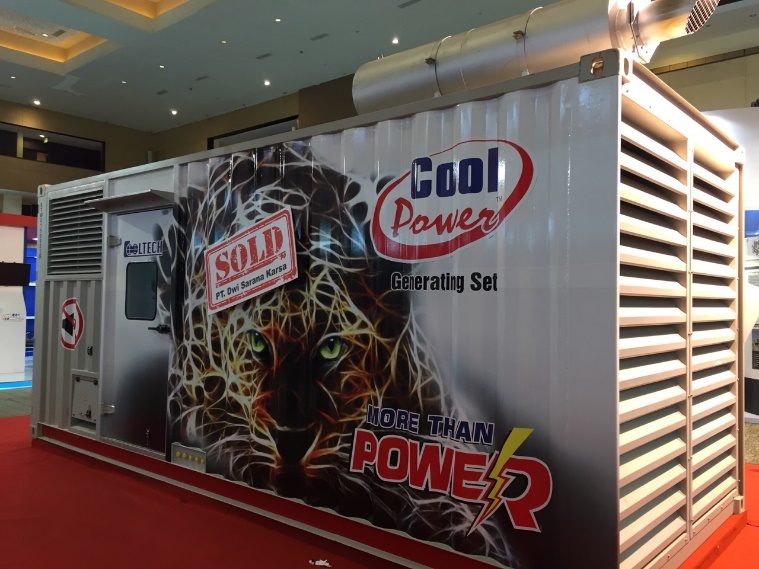
Cooltech Power International Pte Ltd, founded in Singapore in 2007, designs and manufactures customized generator sets for mission-critical facilities — data centres, telecom infrastructure and power plants — where every minute of downtime carries heavy costs. Part of Shanghai Cooltech Power Co., Ltd. (Shenzhen Stock Exchange ChiNext: 300153), the group delivers its Cool Power branded generating sets, high- and low-voltage systems, and engineering, procurement and commissioning services across Asia Pacific, Europe, the Middle East and the Americas, with landmark data-centre projects in Indonesia, Malaysia and China.
In June 2025, the group established CP System Integrator Sdn Bhd (CPSI) in Pasir Gudang, Johor — an hour’s drive from its Singapore headquarters, but across a national border. Singapore runs business management, sales, trade finance, export coordination and group reporting; CPSI runs production, procurement, inventory, quality control and delivery operations. Every working day, purchase orders, delivery notes, customs documents, inventory transfers and intercompany transactions flow between the two entities — and between two currencies, SGD and MYR.
As cross-border volumes grew, five gaps became the group’s operational ceiling: information silos between headquarters and the subsidiary; manual coordination by email, phone and messaging apps with duplicate entry on both sides; delayed visibility, with headquarters unable to see factory inventory and the factory unable to see sales orders; a heavy month-end, with intercompany reconciliation across two entities, two currencies and two systems taking one to two weeks; and a collaboration-tool ceiling — approvals moved faster, but an approval did not update inventory. The group had digitized communication, not the business itself.
When CPSI was established, Cooltech Power made a deliberate choice: build the enterprise backbone before scaling, not after. The group defined five selection criteria — one platform for both entities with a single source of truth, native multi-currency and multi-jurisdiction compliance for Singapore and Malaysia, an end-to-end cross-border supply chain from Singapore sales order to Malaysian production and delivery, real-time visibility for both headquarters and subsidiary operations, and room to scale as the group enters new markets. The choice was Kingdee AI Suite, an AI-native enterprise management suite deployed across both entities, unifying finance, supply chain, production and delivery in one platform.
1. One Enterprise, One Data Backbone
Both entities run on a single platform — one database, one set of master data — covering finance, procurement, inventory, production and delivery. Reports drawn from either side of the border come from the same numbers, and the “which system is right?” argument disappears.
2. Cross-Border Supply Chain, Connected End to End
A sales order booked at the Singapore headquarters automatically triggers the production plan at the Malaysian factory, which drives procurement and inventory updates — no emails, no re-entry, no waiting. Order-to-production handoffs that once travelled across the border by email and phone now execute inside one system, in minutes rather than days.
3. Real-Time Visibility on Both Sides of the Border
Headquarters sees factory inventory as it moves; the factory sees sales orders as they land. Visibility spans supplier delivery, production status, finished-goods inventory, cross-border delivery and customer site — the overseas operations team stops chasing headquarters for status, because the system reports progress in real time.
4. Intercompany Automation with Dual-Currency Compliance
Internal transactions between Singapore and Malaysia are generated, matched and reconciled automatically; SGD and MYR are handled natively, with reporting aligned to both jurisdictions’ requirements. The month-end manual reconciliation exercise is eliminated — group consolidation is continuous rather than monthly.
5. AI Inside Daily Operations
Intelligent agents assist with anomaly detection, automated approvals and proactive early warnings across the transaction chain. Exceptions surface before they become problems — the system alerts, people decide.
The outcome is measurable: group consolidation and intercompany reconciliation have moved from one to two weeks of manual matching to real-time automation; two disconnected systems have become one platform, one database and one data source; SGD and MYR, once reconciled manually, are now handled through native dual-currency accounting; order-to-production handoffs have moved from email and phone across the border to an automated trigger within one platform; and inventory visibility has changed from delayed and one-sided to real-time in both directions.
For Cooltech Power, the platform is a foundation, not a finish line. The same architecture extends as the group scales — deepening the role of its Batam regional service hub, serving export customers across four regions, and onboarding future entities without re-architecture. And as a mid-sized manufacturer with two entities and a cross-border supply chain, Cooltech Power shows what other enterprises in ASEAN can repeat: physical proximity is not integration — the real distance between entities is measured by the speed of information flow.